Alexa Ford ‘26, Social Media Manager
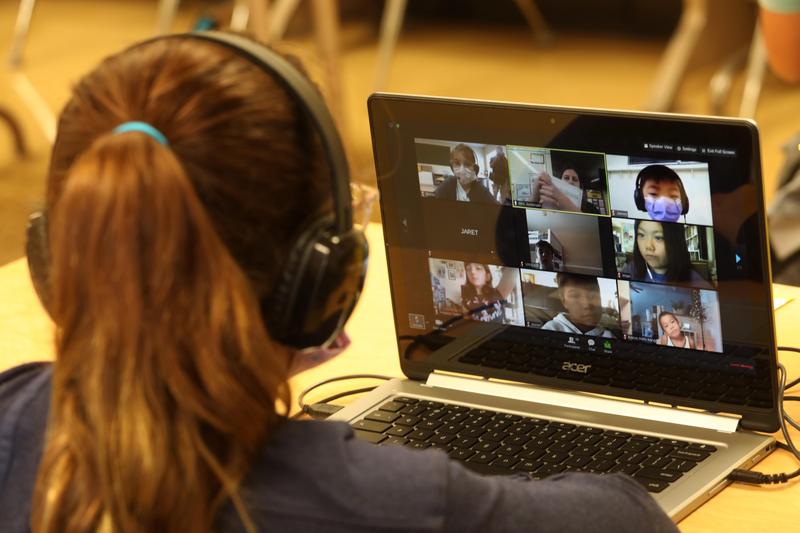
Since the COVID-19 pandemic, parents and teachers have noticed an ongoing issue among students: many students’ reading, writing, and math skills are at levels lower than prior to the pandemic. Due to nationwide school closures, students were taught virtually. Through virtual instruction, students were not learning properly, as many found it hard to focus and obtain information through a screen, along with being trapped inside and not seeing their friends and family. The disruption to normal learning in the classroom has led to what experts are calling a “literacy setback.”
According to the Nations Report Card, students at age nine were tested in reading and math by taking a NAEP Long-Term Trend (LTT) assessment. They had scores in reading that declined from 220 to 215 between 2020 to 2022, and the math scores have declined from 241 to 234 from the stretch from 2020 to 2022. This is the largest average score decline in the reading category since 1990, and the largest decline ever recorded in mathematics. This information shows a real-life description of how significant the scores have declined in just two short years, in the prime of the pandemic.
While younger students are heavily impacted by their low scores in math and reading as they are being taught these skills for the first time, high school students have also shown a large decline in literacy rates. According to NBC News, in reading, high school students’ average score in 2024 was the lowest score in the history of the reading assessment, which began in 1992. Thirty two percent of high school seniors scored below average of 220. This shows that since over 30 years ago, reading scores are below average of what they have been before. In math, scores are at their lowest since 2005. While taking the LTT test, 45 percent of seniors were scoring below “basic average.” This is almost half of the test group that have not met basic math standards. Also tested, only 33 percent of these seniors were considered proficient and ready for a college level math course. This makes people think to themselves, if only less than half of these students are considered ready to succeed in college, how are the other 67 percent going to succeed in a college level course? This leaves many unanswered questions and concerns not only among parents, but also teachers and schools as well.
Teachers are getting students each year that are either struggling, falling behind, or not testing at a typical level for the grade. As they can not just stop their lesson plans below normal requirements to meet these new test scores, they have to figure out how to keep up. This leaves teachers feeling stressed, and students often feeling like they are falling behind or not able to keep up with the lesson. The overall effect of online school during the pandemic affected teachers just as much as students. English teacher Mr. John Weinraub said, “The worst part about teaching online was the lack of true interaction with the students since so many just did not turn on their cameras. I think overall, so many students suffered academically and socially, which breaks my heart.” Weinraub expresses his view on online school and how it not only affected students academically, but also socially. He also shows how teaching was also a challenge through the screen as many did not have their cameras on to be able to connect to one another. He was able to see how students were not able to interact socially which affected their overall learning and attention span during school.
Many schools are responding to the decline in test scores in a way to better help prepare students and start to get scores higher as years come. Some add in more interactive material, more tutoring and summer courses, or extra academic courses available to take as well, but this is not only about test scores and percentages. Students are left feeling defeated and unmotivated due to their step back in learning and still adjusting back to regular learning even 6 years later. Senior Alina Plauisak said, “Ever since online school, I have found it hard to focus and get my work done. I feel like learning has been harder for me since the pandemic and since the majority of our assignments are still done online.” Plausiak, even years later, speaks to the ways in which the pandemic is still affecting her learning and how she learns. Others are falling behind or feeling like they are lost in new material with their old basic skills from virtual learning not being obtained.
On another level, parents are concerned for their children and their ability to succeed academically. Noticing these numbers going down each year is keeping everyone on edge. Not only for the parents, but teachers and educators as well. The literacy and mathematics rate decline highlights how the pandemic did not just affect basic life skills and social relationships, but it is taking a large effect on learning. It shows the long-term effects this pandemic has left on students and teachers. While these numbers may take time to get back up, it is important for students to recover and continue to try their hardest and take additional educational steps when needed. The COVID-19 pandemic has left many effects on the world, and even years after, the long lasting impact and long term effects us students and teachers still struggle with today.

