CJ Clark ‘26, Hot or Not Editor
As 2026 has rolled into the springtime of March and soon the summer in June, the clay season for tennis kicks off. The Association of Tennis Professionals (ATP) tour has left the hard courts of the renowned U.S. tournaments of Miami and Indian Wells, and moves to clay until June. There will be a total of 11 tournaments on the surface of red clay between March 30 and June 7.
The tournaments on this surface for 2026 are four ATP 250 events (Grand Prix Hassan II, U.S. Men’s Clay Court Championship, Tiriac Open, and the Gonet Geneva Open), three ATP 500 events (BMW Open, Barcelona Open, and the Bitpanda Hamburg Open), three ATP Masters 1000 tournaments (Rolex Monte-Carlo Masters, Mutua Madrid Open, and the Internazionali BNL d’Italia), and one Grand Slam tournament(Roland Garros). While the clay season may seem quite extensive to any normal person, it is far shorter in contrast to the number of hard-court tournaments since it is the dominant surface on the tour.
The reason these tournaments are listed in numbers such as 250, 500, 1000, and then Grand Slams is due to their significance in how many ranking points and prize money they award to players. The higher the number of the tournament, the more ranking points awarded and prize money for players who win. So a 1000-level match will give more ranking points and prize money than a 250-level match; however, Grand Slams award the most points and prize money to players.
Clay courts reward certain players over others, such as those who prefer to hit more flat (creating less spin so the ball bounces lower and goes faster) or more loopier (creating more spin so the ball bounces higher and goes fast but not as fast compared to hitting the ball flat) with greater shape on the ball. Proper sliding is an essential part of a player’s game, ensuring they can get to the ball in time and decelerate their momentum quickly enough to get to the next shot their opponent may fire at them. Many players struggle on this surface and dislike it quite a bit, with top player Daniil Medvedev’s opinion being one of the most notable takes on the surface. According to Tennis.com, he once stated, “If you like to play in the dirt like a dog, then I don’t judge…I wish we could continue on hard.’”
Furthermore, while Medvedev was sitting down on changeover (during matches on every odd number of games players switch sides and get a little break to sit down before going to the other side) during one of his matches during the Madrid Open, clay tournament, he was caught on camera whacking his racket at the ground and saying emphatically, “I don’t want to play here on this surface.” This is just one instance of many players’ dislike of this surface and the clay season. Many struggle with clay tactics that they may need to perform well in the clay season. They may be unable to adapt their game to the surface, as the surface typically favors players with a heavier ball with more shape.
To expand further on the tactics on the clay compared to other surfaces, having shape is an essential aspect needed for players to excel in the clay season. Attaining heavy topspin and consistently putting deep shots past the service line and delivering quality balls consistently are essential. Clay courts are naturally slower, which allows for more time for players to prepare and thus makes for longer rallies. Since players have extra time on clay compared to other surfaces, it is significant for players to take time away from their opponent in any way they can. By constantly putting deep heavy balls with lots of topspin and shape, players can force their opponents to give them an attackable ball in which they can step into the court to advance to the net, finish the point, or draw an unforced error. More effectively, players can go for tighter angles with heavy spin to open up the court by throwing their opponent several feet off the court. Thus, longer rallies are inevitable on clay; therefore, this is another factor for which players have to account. Many players in Europe typically grow up on this surface, so they find it easier to play on compared to players who have done so mainly on hard courts for most of their junior career.
Rafael Nadal, the best court specialist, won the biggest clay tournament of the year (The Grand Slam Roland Garros) a record-breaking 14 times in his career. He was from Spain and grew up on the surface, as it was more readily available and widely used there, and his game style was more suited for clay. Hence, many different variables must be considered for players when moving on to the clay season.
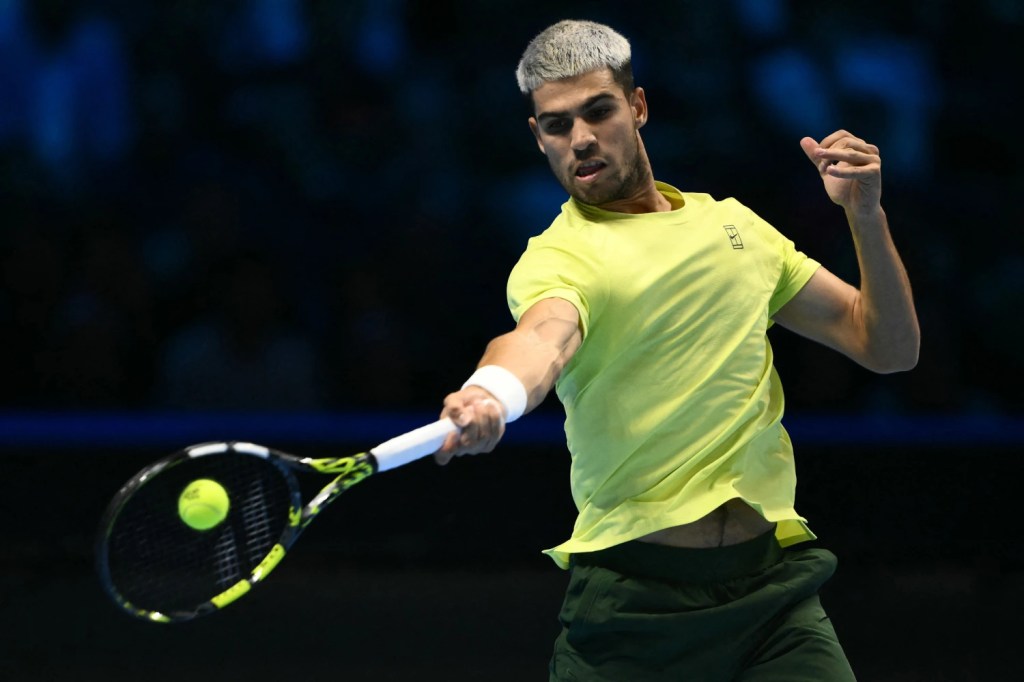
According to a Tennis Nerd article that displays the clay ATP 2026 power rankings, “Alcaraz is a clear number one heading into this year’s clay swing. He’s been one of the two best players of the year so far, and is now entering the surface he favors most. Last year, he lost just once on clay, winning Monte-Carlo, Rome, and Roland-Garros.” Furthermore, Alcaraz has 11 of his titles on clay. These titles include two majors and four Masters, and his game is perfectly suited to the surface as well, with components such as his physicality, spin, and variation, and how high above the net he plays to ensure a large margin of error to not hit the ball into the net as much and make more balls into the court. Alcaraz grew up on clay since he is from Spain, so he is exceptionally comfortable with playing on clay.
Alcaraz’s confidence on clay is displayed in his achievement of having won two Grand Slam titles on clay (French Open) at just 22 years old. Furthermore, for the past two years, the Grand Slams, which are the biggest tournaments of the year ( four major Grand Slams are the U.S Open, French Open, Australian Open, and Wimbledon), have been won by one of two people: Alcaraz and another player named Jannik Sinner. While Alcaraz is viewed by most as the clear favorite for this year’s clay season, it is important to note that Sinner was just one point away from stealing the French Open (Roland Garros) from him last year. The match went down as one of the best in history, with Alcaraz beating Sinner in a five-set thriller; the match lasted a staggering five hours and 29 minutes. The two have had an immaculate rivalry and produce some amazing tennis to watch. Sinner and Alcaraz are the two best players in the world, and Sinner’s stats do nothing but uphold this—the 24-year-old already has four Grand Slam titles. Both players will play a significant role in this year’s clay season.
Conclusively, the clay season will certainly be thrilling as it always is every year, with many fun surprises and highlights. Alcaraz will be viewed as the favorite going into the clay season with his outstanding performance last year. Be sure to buckle up for this year’s series of clay tennis matches; they will not disappoint.
 Lyon Life