Nathan VanSteenkiste ‘26, Copy Editor
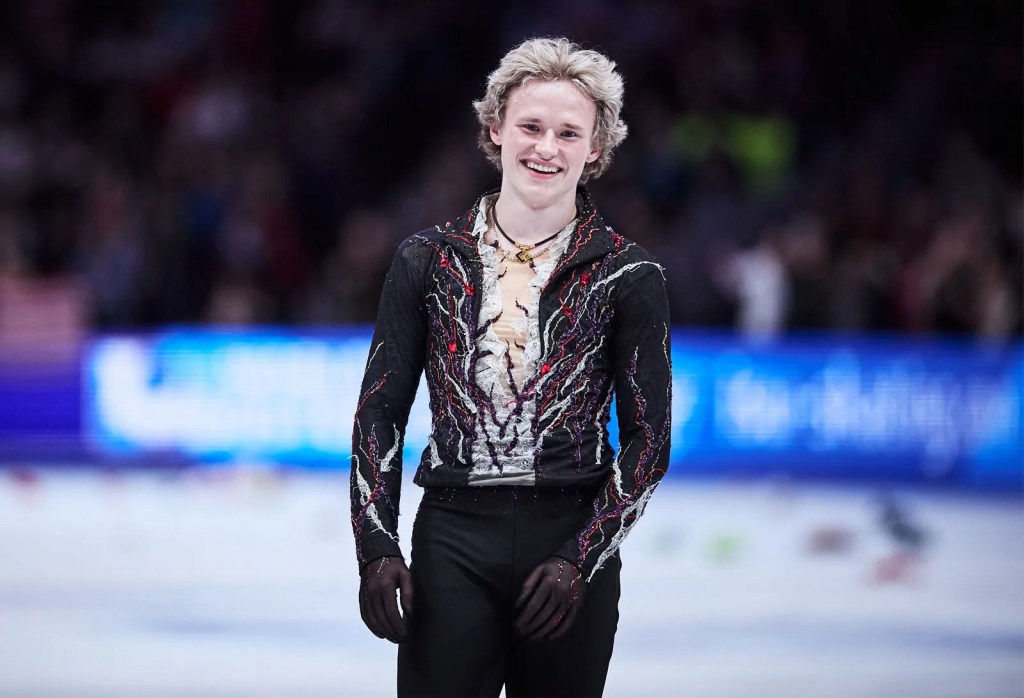
Ilia Malinin, regarded by the figure skating community as the greatest jumper in the history of the sport, entered the men’s individual competition as the favorite for gold. As the first skater in history to complete seven quads—jumps that require at least four rotations in the air—in a single competitive free skate, which he did in December of 2025. The ‘Quad God,’ Malinin’s self-proclaimed nickname, entered the competition with a degree of difficulty that was seemingly impossible to top. He seemed like a virtual guarantee for gold, especially considering that he had not lost a competition since November 2023. And the only thing that could threaten Malinin’s changes was if disaster were to strike. Well, to put it plainly, that is precisely what transpired.
In the short program, the ‘Quad God’ looked like his usual self—confident, comfortable, and clean—and scored 108.16 points, which gave him a comfortable five-point lead over Japanese skater Yuma Kagiyama entering the free skate. But when Malinin took the ice for the second day of competition, the skater was evidently feeling the pressure of the games. On his second jump, the quad axel—Malinin is the only skater ever to land a quad axel in a competition, and it is the hardest jump in figure skating because it takes off from a forward stance, requiring a skater to complete four-and-a-half rotations in the air—he popped it, completing only a single jump. And from there, the performance, along with Malinin’s medal chances, completely dissolved, as Malinin popped jumps left and right, stumbling across the ice, and, uncharacteristically, falling on one of his elements. To win gold, the ‘Quad God’ certainly did not need to be perfect because of his extreme difficulty, but he could not afford a program as disastrous as that one.
As analyzed by former Olympic figure skater Johnny Weir, a commentator for the competition, “It felt like [Malinin] was going for the quad axel as the second jump. When that didn’t work out, he was trying to figure out, mentally, where to put the points back in. And it just started to unravel.” Adding, “I think that…he got so overwhelmed in the moment that he couldn’t feel what he was actually trained to do.” When Malinin stepped off the ice, what he, viewers, audience members, and figure skating fans alike felt was more than just disappointment for what could have been—the entire skating world was in disbelief. Absolutely no one would have predicted that Malinin, after the free skate, would leave Milan without an individual gold medal, let alone without any medal whatsoever. The ‘Quad God’ finished fifteenth for the free skate and in eighth place.
After the competition, Malinin posted to Instagram, “On the world’s biggest stage, those who appear the strongest may still be fighting invisible battles on the inside. Even your happiest moments can end up tainted by the noise. Vile online hatred attacks the mind and fear lures it into the darkness, no matter how hard you try to stay sane through the endless insurmountable pressure. It all builds up as these moments flash before your eyes, resulting in an inevitable crash.”
This incomprehensible amount of responsibility Malinin felt became somewhat of a recurring theme at recent Olympics, such as in 2021 when Simone Biles had to pull out of the individual all-around competition because she was suffering from the “twisties”—a dangerous condition typically caused by extreme stress and mental pressure in which gymnasts lose awareness while midair.” Luckily, Biles has been supportive of Malinin, reaching out to him, and even commenting to the media, “I know exactly what he’s going through. I know most athletes might not be able to relate. It’s really, really hard to watch, but he’s still an absolute legend.”
If Biles and Malinin’s Olympic journeys have taught fans anything, it is that there will always be immense pressure placed on the “greats” of our time, especially by the media. Eager for captivating storylines and to draw people into their coverage of events, Malinin’s face was plastered everywhere for weeks. He, along with other winter sports legends—including Hilary Knight, Chloe Kim, and Lindsay Vonn—were in most of NBC’s advertisements for the games. On competition days, Malinin’s face was the first thing that you saw when opening the Peacock app. And, immediately after skaters got off the ice, including after Malinin’s heartbreaking showing, they were being broadcast live to the entire world. How is anyone supposed to handle that pressure?
Malinin was built up to be this unstoppable force and locked for the top spot on the podium—which makes little sense, as no gold medal is guaranteed, especially in such a high-risk sport as figure skating. Additionally, the immense and continual coverage created a sense of a responsibility in the 21-year-old. He was not just competing for himself but also eager fans across the entire nation. When athletes, especially, are made to feel like they must deliver “or else,” there can clearly be some drastic consequences.
As the ‘Quad God’ explained, “‘It’s not a pleasant feeling’ is the most honest way to say it. So many eyes, so much attention. It can really get to you if you’re not ready to fully embrace it. That may be one of the mistakes I made, I was not ready to handle that to the fullest extent.”
Nevertheless, following the free program, Malinin has demonstrated exemplary emotional maturity in his interviews and when interacting with other competitors and has already returned stronger and ready for the World Championships in Prague. At a recent ice show, he even hit a backflip in combination with a quad axel; evidently, the ‘Quad God’ remains the greatest skater on the men’s competition circuit and has not taken his rollercoaster first Olympics to heart.
 Lyon Life