Logan Skrzypek ‘27, Copy Editor
Dear International Olympic Committee,
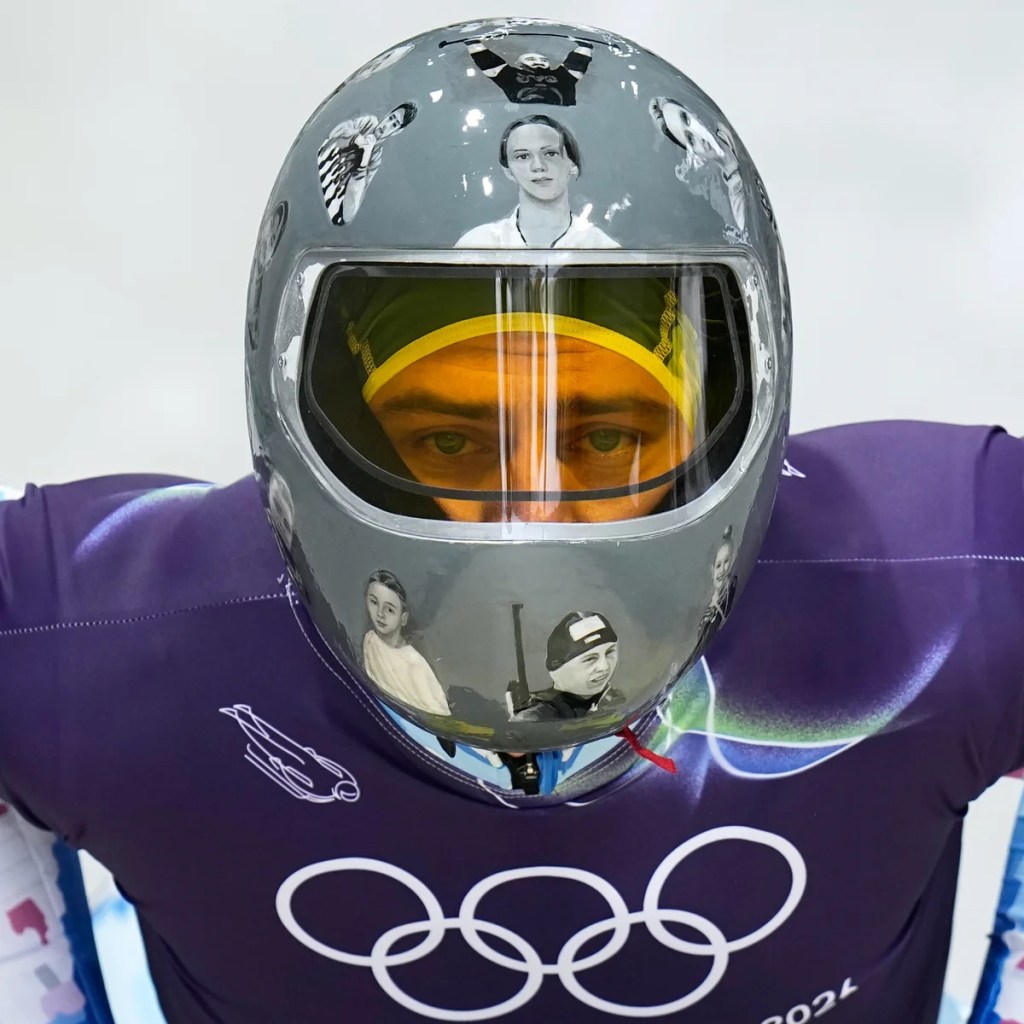
Everything concerning your decision in Milano Cortina deserves more than a press release and a rule citation; it deserves a clear, detailed, and unbiased explanation. Forty five minutes before the men’s skeleton event, you disqualified 27-year-old Ukrainian slider Vladyslav Heraskevych for the helmet he chose to wear—a helmet painted with faces of more than twenty Ukrainian athletes and coaches killed by Russians in the Ukrainian War. You called this “messaging,” a violation of the rules, but anyone with a basic sense of humanity could see what it truthfully was: a memorial.
Heraskevych wore the helmet with pride during training for three days prior to the Olympic competition; he was not worried or concerned about the public’s opinion on his helmet. His coaches, other Ukrainian athletes, and he himself said it as a way to carry remembrance to the friends and allies he and his country have lost. When you told him to replace the helmet, he refused—because to him, it was not just a decoration, it was loyalty and honor. After the disqualification was televised, he said, “It would be a disgrace to them and to me. That is not politics, that is just grief.”
The president of your committee, Kristy Coventry, insisted that the disqualification was “not about the messaging” but about maintaining a neutral perspective on the ‘clear’ rules of the competition. But according to Google, the definition of neutrality, as you used it, is a conscious choice not to intervene in a dispute or not to support either side. However, you did intervene. Even Ukraine’s president, Volodymyr Zelensky, had to remind you of something that should not have needed reminding: “Sport should not mean amnesia.” Yet, your committee’s ruling demanded exactly that—that an athlete pretends that he has not lost teammates, coaches, and friends to a war he had absolutely no control over.
Then, there is the rule you leaned on to ‘support’ your decision: rule 40.2 of the Olympic Charter. This rule promises athletes “freedom of expression” as long as it aligns with Olympic values, an ideal that is very vaguely worded. When the boundaries are not clear, and the rule can be stretched to justify almost anything, the selectivity of using this rule is seemingly glaring.
While you punished a Ukrainian athlete for honoring lives lost, you allowed others to skate by with symbols far closer to actual political messaging. An Italian snowboarder competed with a Russian flag on his helmet, whilst Russia was banned from the games by your committee. That was allowed, but a memorial to murdered athletes was not? If neutrality is the goal being expressed, explain why a flag from a banned nation is acceptable, but faces of the dead are somehow too provocative for the public to witness.
Nothing about Heraskevych’s helmet was propaganda or political; it did not call for action and was not an insult to another country represented in the Olympics. It simply acknowledged loss, and if acknowledging loss is now considered political, then the problem is not the athlete, it is the committee that cannot tell the difference between remembrance and politics. Your decision did not protect the integrity you wish to express in your games, it just protected your comfort. The Olympics have never been separate from connecting the world, that is exactly what it is shaped by. You are not defending neutrality, you are enforcing silence. A memorial is not a symbol of politics. The reason you think this way is because of the humanity that you lack in this situation.
Sincerely, a concerned viewer of the Winter Olympics
 Lyon Life