Logan Skrzypek ‘27, Copy Editor
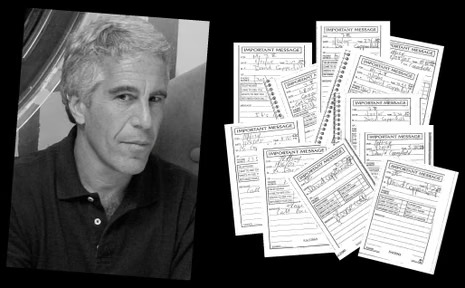
Inside the crucible of American democracy, a single signature stands between the American public and the long-awaited release of the Jeffrey Epstein files. That signature belongs to Democratic Representative-elect Adelita Grijivala of Arizona, who won her seat in a landslide on Sept. 23. Despite her victory, she has yet to be sworn in. The delay, orchestrated by House Speaker Mike Johnson, has ignited bipartisan outrage and raised serious questions about transparency, political loyalty, and the lingering influence of President Donald Trump.
At the heart of the controversy is a discharge petition—an obscure but powerful legislative tool. This would force a vote on a bill requiring the Justice Department to release its investigative files on Epstein, the disgraced financier whose death in federal custody left behind a trail of unanswered questions and powerful connections. The petition currently has 217 signatures. That number would go up to 218 with Grijalva’s signature; the magic number needed to bring the bill to the floor, according to MSN News. So, if she is the signature many are anxiously waiting for, why has she not been sworn in?
Speaker Johnson insists the delay is procedural, citing the ongoing government shutdown and claiming that the House “cannot conduct official business until it reconvenes,” as he said in an article published for Cronkite News. Critics are simply not buying it. They point to the fact that other representatives—some even during past shutdowns—have been sworn in promptly after special elections. Grijalva herself has expressed frustration, noting that “all rules have changed” biased against her.
The timing and context suggest something deeper than scheduling logistics. Grijalva has made it clear that her first act in office would be to sign the discharge petition. That signature would trigger a vote that could expose names, communications, and connections between Epstein and high-profiles figures—including, reportedly, Trump. The Trump administration opposed the release, and one White House official warned that support for the petition would be seen as a “hostile act.”
This resistance has sparked speculation that Johnson’s delay is less about procedure and more about protection—of Trump, of political allies, and of a system that has long shielded those in power from accountability. Democratic Senators Mark Kelly and Ruben Gallego confronted Johnson directly, accusing him of “covering up for pedophiles,” and using the shutdown as a smokescreen. Johnson dismissed the accusations as “totally absurd,” but the optics are hard to ignore.
The Epstein files are not just a political hot potato—they are a moral reckoning. Survivors of Epstein’s abuse, including the family of Virginia Giuffre, have pleaded with Congress to “stop playing politics and start delivering justice… These are actual victims and survivors,” Giuffre’s brother, Sky Roberts said. “This hurts every time [Johnson] comes out and just says, ‘Oh well, only a dozen survivors came to Washington to actually come forward.’ How many is it gonna take?”
Even some Republicans have broken ranks. Representative Thomas Massie, who co-authored the bill with Democrat Ro Khanna, has criticized the recess and called for immediate action. MAGA-aligned figures like Representative Majorie Taylor Greene have also voiced support for the petition, asking, “Aren’t we all against convicted pedophiles and anyone who enables them?” Yet the House of Representatives remains in recess, Grijalva remains unsworn and the files remain sealed.
The moment is more than a procedural delay—it is a test of our democratic values. Will Congress prioritize justice and truth over loyalty? Will victims’ voices outweigh political calculations? Will the public demand answers, even when those answers may implicate the “powerful?” For students watching from the sidelines, this is a lesson in civic engagement. The Epstein case is not just a scandal—it is a mirror reflecting the tensions between justice and power, transparency, and secrecy. It is a reminder that democracy depends not just on elections, but on accountability. Sometimes, all it takes is one signature to tip the balance.
 Lyon Life